
Every page in the Bullet Journal is given a topic and these topics are referred to as Collections.
Every entry in the Bullet Journal is by definition a Collection, regardless of what it looks like.
There are 3 main types of Collections that make up the Bullet Journal (Future Log, Monthly Log, and Daily Log):
1. Future Log
This is where you write down events occurring in future months. You can create the layout that makes the most sense to you, the basic iteration is this one:
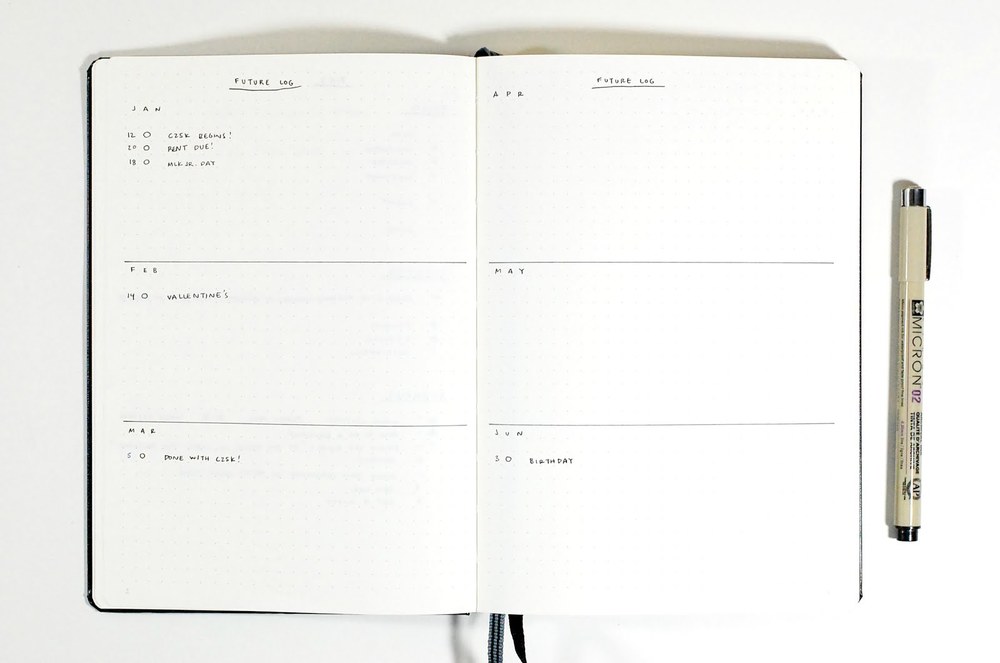
Also create a blank page to keep Events and Tasks you don’t have a specific date in mind to get to, but want to at some point, such as buying a motorcycle.
2. Monthly Log
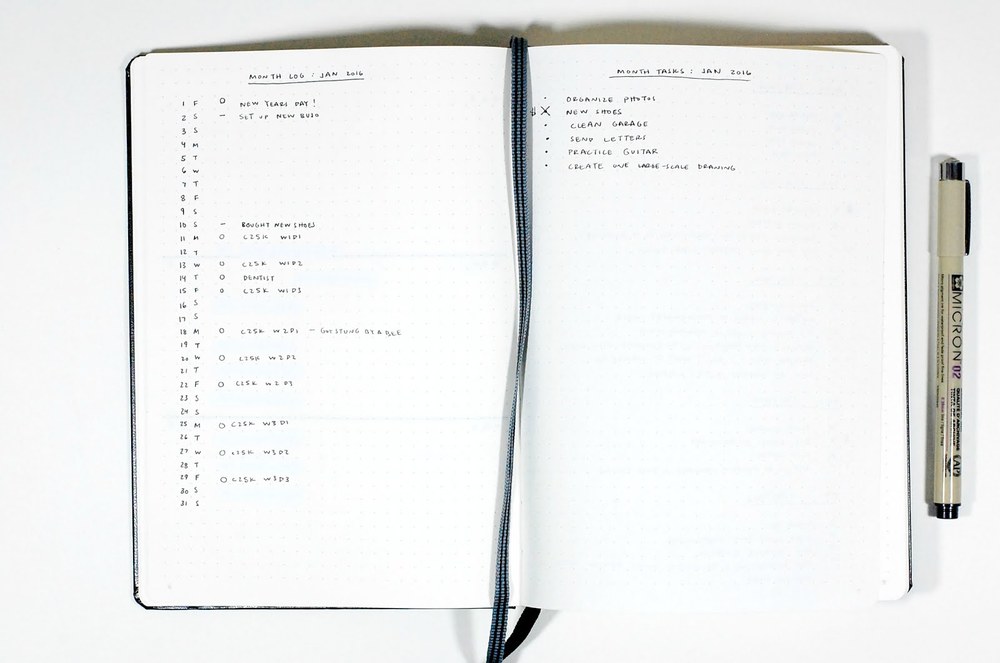
The Monthly Log consists of two facing pages, one is the Calendar Page and the other is the Task Page.
Calendar Page
Use this to write down your Events and/or add a Note of what happened. The Calendar is laid out this way to give you enough space to write a short snippet of Events you may have going on and also to Note anything you may wish to remember. This will allow you to get a snapshot of what happened.
Task Page
This list consists of Tasks you want to get done this month and tasks from last month. I will explain the second part of this sentence in a moment.
3. Daily Log
This is the heart of the Bullet Journal. This is used on a day-to-day basis. The date will be the topic. Throughout the course of the day you will rapid-log Tasks, Events, and Notes as they occur.
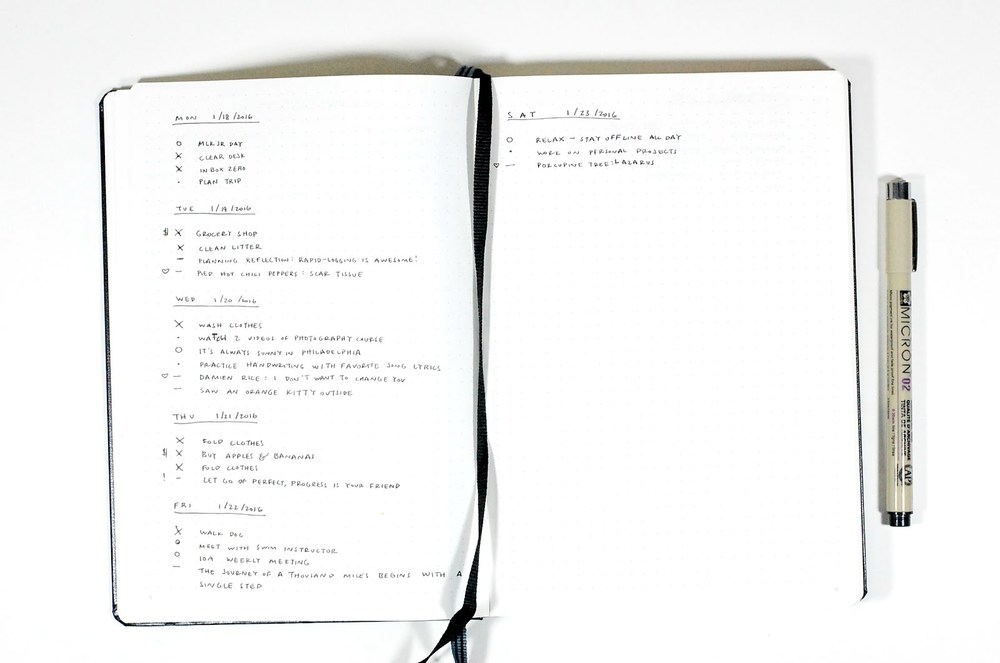
No worries if you skip a few days here and there. The beauty of the Bullet Journal is that you can pick it up whenever!
Other Collections
Collections are a group of related ideas. Every single page in the Bullet Journal is by definition considered a Collection. This includes the Monthly Log, Daily Log, Future Log, and any page you give a topic to. Every page in the Bullet Journal will have a topic assigned to it, thus every entry you add into your Bullet Journal is a Collection.
To reiterate: every entry is considered a Collection.
For example, a food log, shopping list, meeting notes, and more are all considered Collections.
Collections can take any shape or form.
Collections can be mindmaps, goal plans, trackers, brainstorming, journaling, sketchnotes, notes, blueprints, design mock-ups, sketches, doodles, ANYTHING. If your mind can conceive it, your notebook can contain it.
You can make a drawing on a page and the way you’d add that to the Index is by writing, “Drawings: 5, 8-9, 17, …”
Let's take a look at some examples of Collections to help you cement the idea that EVERYTHING you could ever want to add into this special notebook system is considered a Collection.
Remember, a Collection is a grouping of related ideas, no matter what the form.
Collection (List):
You can make a list of anything! Here I made a list of songs I like. If you recall, in the Daily Log I have these songs with a Note Bullet. I have since Migrated them to a Collection to keep them in one place, as per the Bullet Journal guidelines when you find yourself writing down the same kind of idea over and again in your Daily Logs.
Collections can begin organically, however, and do not need to be started in the Daily Logs. You can start a Collection anytime you want to write down related ideas.

Collection (Log):
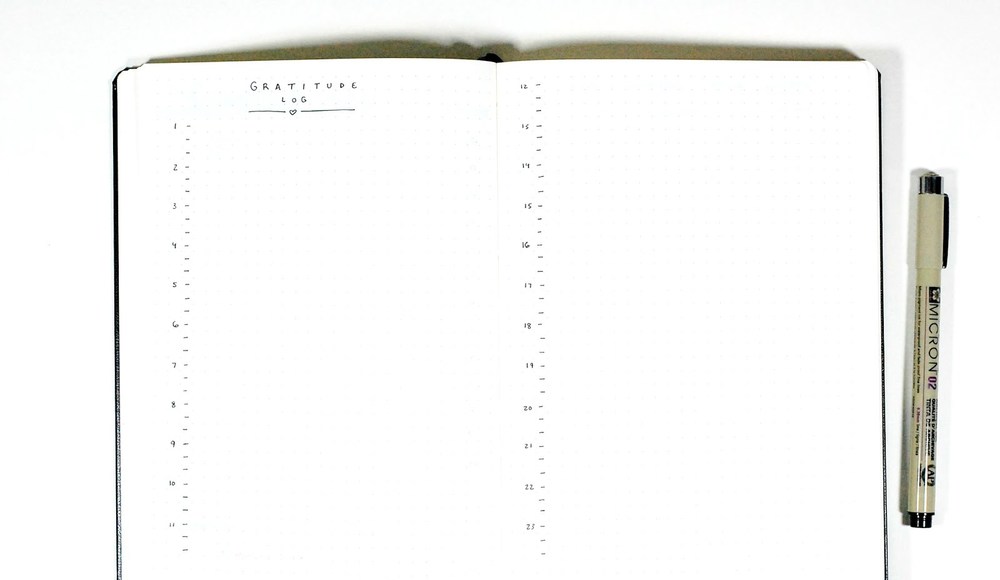
Collections can be logs of some kind. Here is the Gratitude Log I created to write down 3 things I am thankful for each night, seeing them all in one place makes my heart happy.
Collection (Notes):
Collections can be a series of notes.

Collections (Log & Tracker):
Collections can take a bit of form and set up according to how you need them. Here I set up a tracker and log hybrid to write down notes about how I feel after my C25K runs.

Collection (Mind-map):
Collections are free-form by nature, which makes it a perfect place to create mind-maps to connect thoughts.
The thing to remember is that at its core, the Bullet Journal is based in a notebook, and because of this reason you can add anything to it and organize it with the Index. Simply begin an idea on a new page, give it a topic (title) and Index it!

Collection (Goal Plans):
Goals are fun to think about in a notebook. The Bullet Journal allows for a huge amount of flexibility and because of this, you can add ANYTHING to it. Here I wrote out my plan for losing 15lbs, wrote out my motivation (to remind me of why I'm going for this goal on tougher days), wrote out a S.M.A.R.T. game plan, and color-coded to connect the ideas on how I would follow-through. (Please try to ignore the fact that I misspelled a word...)

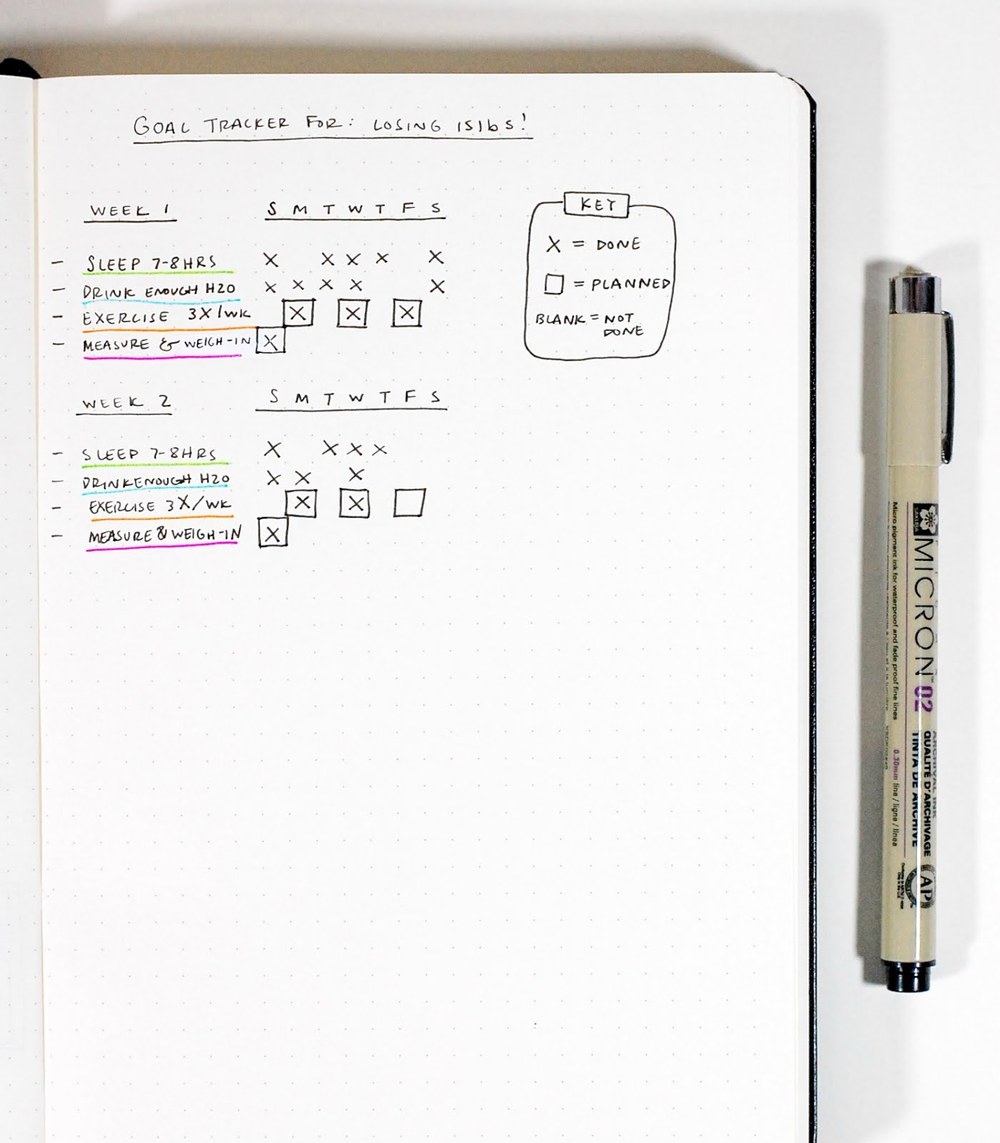
Collection (Tracker):
Simply making an intentional plan isn't enough, there needs to some sort of system implemented to help you reach your goals. A tracker is the perfect thing to help you reach your aims! Here's a week-by-week tracker related to the goal plan from the last photo.
Collection (Sketches):
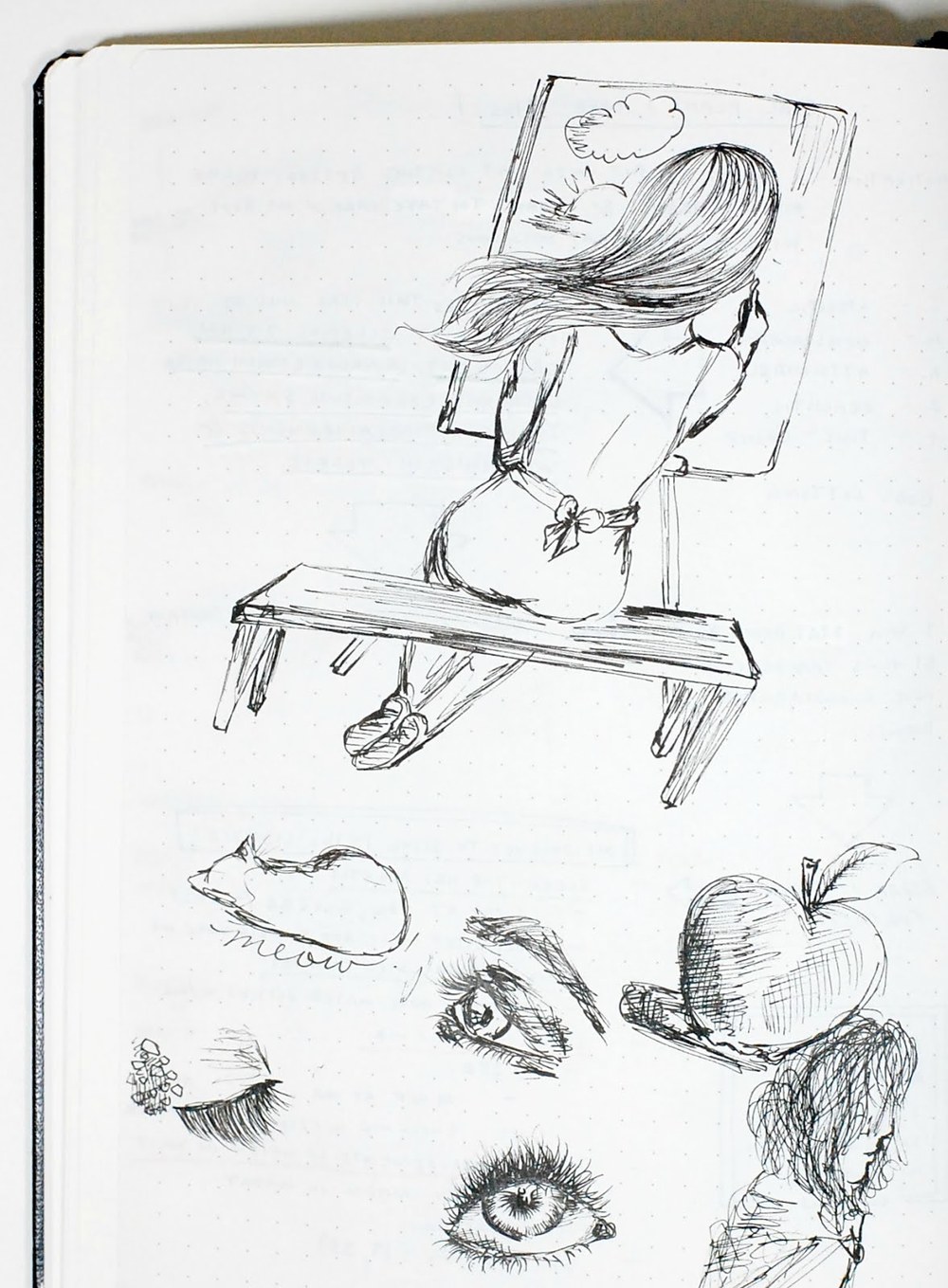
Sometimes you just want to turn the page and sketch. Simply make an entry in your Index called, "Sketches: 22, 45-49,..." and add to it to keep track of your Collections that span across several pages. Here are some quick sketches I made.
There are many, many other forms and types of Collections I'm sure you could come up with! It's a notebook, first and foremost, and the blank page is a canvas to create anything you wish! Loosely paraphrasing from Ryder. You fill Collections with short-form notations. In the Bullet Journal, these notations are referred to as Rapid-logging.
Comments
0 comments
Please sign in to leave a comment.